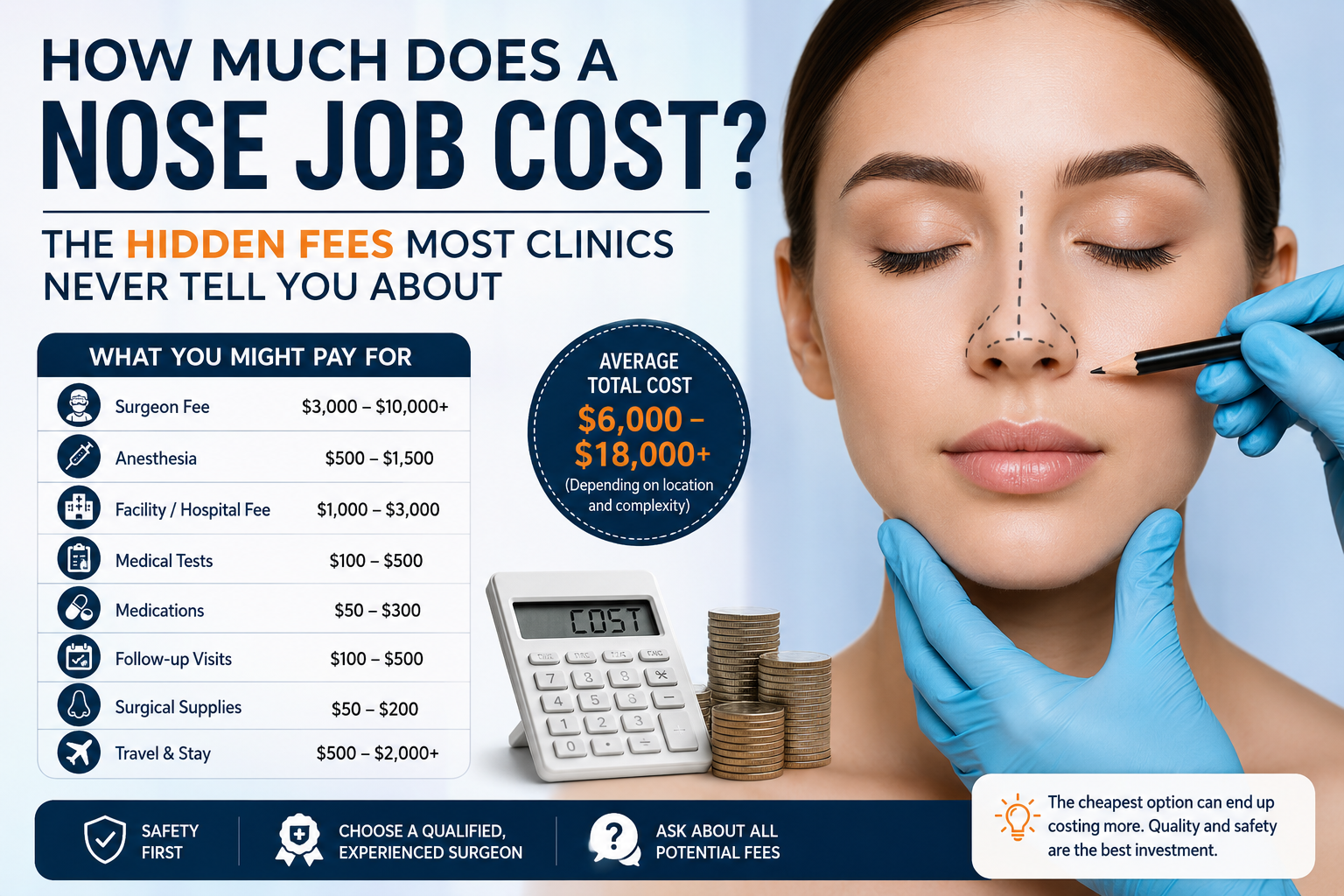
If you’re wondering how much does a nose job cost, you’re not alone. Rhinoplasty is one of the most popular cosmetic procedures worldwide, but many people are surprised to learn that the advertised price is often only part of the total expense.
Many clinics promote attractive starting prices, but additional charges can significantly increase your final bill. Consultation fees, anesthesia, hospital charges, medications, and follow-up appointments are just a few expenses that may not be included in the initial quote.
This comprehensive guide explains everything you need to know about how much does a nose job cost, including hidden fees, factors affecting pricing, financing options, and practical tips for choosing the right surgeon.
What Is a Nose Job?
A nose job, medically known as rhinoplasty, is a surgical procedure that changes the shape, size, or function of the nose.
People choose rhinoplasty for several reasons:
- Improve facial balance
- Correct a hump or crooked nose
- Reduce or increase nose size
- Refine the nasal tip
- Correct breathing problems
- Repair injuries after accidents
- Fix birth defects
There are generally two types:
Cosmetic Rhinoplasty
Performed to improve appearance.
Functional Rhinoplasty
Performed to improve breathing or repair structural issues.
Sometimes both goals are achieved in one surgery.
How Much Does a Nose Job Cost?
The answer depends on your country, surgeon’s experience, clinic reputation, and the complexity of your procedure.
Here are approximate price ranges:
| Country | Estimated Cost |
|---|---|
| United States | $6,000 – $18,000 |
| Canada | $7,000 – $15,000 |
| United Kingdom | £5,000 – £12,000 |
| Australia | AUD $8,000 – $18,000 |
| Turkey | $2,500 – $7,000 |
| Mexico | $3,000 – $8,000 |
| Pakistan | PKR 180,000 – PKR 600,000+ |
| India | ₹80,000 – ₹350,000 |
These figures are estimates only. Actual prices vary depending on the surgeon, hospital, and procedure complexity.
Why Nose Job Prices Vary So Much
Many people wonder why one clinic charges three times more than another.
Several important factors influence the cost.
1. Surgeon’s Experience
Highly experienced surgeons usually charge more because they have:
- Specialized training
- Years of experience
- Better surgical outcomes
- Strong reputation
Choosing the cheapest option can sometimes lead to poor results that require expensive revision surgery.
2. Geographic Location
Medical costs vary significantly between countries and even cities.
For example:
- New York generally costs more than smaller U.S. cities.
- London may cost more than Manchester.
- Cosmetic surgery in Turkey often costs less due to lower operating expenses.
3. Type of Rhinoplasty
Different procedures involve different levels of complexity.
Examples include:
- Closed rhinoplasty
- Open rhinoplasty
- Revision rhinoplasty
- Ethnic rhinoplasty
- Functional rhinoplasty
- Septorhinoplasty
Revision surgery is usually the most expensive because correcting previous work is more challenging.
4. Hospital or Surgical Facility
Costs depend on where your surgery takes place.
Private surgical centers often charge differently from hospitals.
Hospital fees may include:
- Operating room
- Recovery room
- Nursing staff
- Medical equipment
5. Anesthesia
Usually general anaesthesia costs more than local anaesthesia.
The anesthesiologist’s qualifications and surgery duration also affect the cost.
Hidden Fees Most Clinics Never Tell You About
The advertised surgery price may not include several additional expenses.
Here are some of the most common hidden costs.
Initial Consultation
Some surgeons charge separately for consultations.
Typical range:
- $50–$500
Some clinics deduct this fee if you proceed with surgery.
Medical Tests
Before surgery, you may need:
- Blood work
- ECG
- Physical examination
- Imaging scans
These tests can add several hundred dollars to your total.
Prescription Medications
After surgery, you’ll likely need:
- Pain medication
- Antibiotics
- Nasal sprays
Medication costs are often not included in the surgery package.
Compression Garments and Supplies
Recovery may require:
- Nasal splints
- Medical tape
- Saline spray
- Ice packs
These items may cost extra.
Follow-Up Visits
Some surgeons include follow-up appointments, while others charge separately.
Always ask how many visits are covered.
Revision Surgery
Even with excellent surgeons, some patients choose revision rhinoplasty for aesthetic adjustments.
Revision procedures can cost even more than the original surgery.
Travel Expenses
Medical tourists should also budget for:
- Flights
- Hotel accommodation
- Local transportation
- Meals
- Extra recovery days
These costs can sometimes exceed the savings from lower overseas surgery prices.
Time Off Work
Recovery often requires one to three weeks away from work.
Lost income is another expense many people overlook.
Average Cost Breakdown
A typical rhinoplasty bill may include:
| Expense | Estimated Cost |
|---|---|
| Surgeon Fee | Largest portion |
| Anesthesia | Moderate |
| Operating Room | Moderate |
| Hospital Fees | Moderate |
| Consultation | Small |
| Medical Tests | Small |
| Medications | Small |
| Follow-Up Visits | Small |
Always request a detailed written estimate before scheduling surgery.
Does Insurance Cover Rhinoplasty?
Insurance usually does not cover cosmetic rhinoplasty.
However, coverage may be available if surgery is medically necessary, such as:
- Correcting breathing problems
- Repairing a broken nose
- Treating congenital defects
- Reconstructive surgery after trauma
Your insurance provider determines eligibility based on your policy and medical documentation.
Financing Options
Many clinics offer payment plans to make surgery more affordable.
Common options include:
- Monthly installment plans
- Medical financing companies
- Personal loans
- Health savings accounts (where available)
Always review interest rates and repayment terms before committing.
How to Save Money Without Sacrificing Safety
Lower prices can be appealing, but quality should always come first.
Consider these strategies:
Compare Multiple Consultations
Speak with several qualified surgeons before making a decision.
Ask for a Full Cost Breakdown
Request a written quote that includes every expected expense.
Avoid Deals That Seem Too Good
Extremely low prices may indicate lower-quality facilities or limited aftercare.
Consider Medical Tourism Carefully
Countries with lower healthcare costs can offer savings, but research the surgeon’s qualifications, clinic standards, and follow-up care thoroughly.
Budget for Recovery
Set aside extra funds for medications, transportation, and unexpected expenses.
Questions to Ask Before Booking
Before scheduling your procedure, ask:
- Is the consultation included?
- Does the quote include anesthesia?
- Are hospital fees included?
- How many follow-up appointments are covered?
- Are medications included?
- What happens if revision surgery is needed?
- Are there any additional charges?
These questions can help you avoid unexpected bills.
Risks of Choosing the Cheapest Nose Job
While saving money is important, selecting a surgeon based solely on price can increase the risk of:
- Poor cosmetic results
- Breathing difficulties
- Infection
- Scarring
- Revision surgery
- Longer recovery
Choosing a qualified, experienced surgeon is often the safest long-term investment.
Recovery Costs to Consider
Recovery involves more than the surgery itself.
Possible additional expenses include:
- Extra pillows for sleeping
- Healthy meals
- Transportation to follow-up appointments
- Childcare or household assistance
- Additional medications
Planning for these costs can reduce financial stress during recovery.
Is a Nose Job Worth the Cost?
For many people, rhinoplasty can improve confidence, facial harmony, or breathing. Whether it’s worth the investment depends on your goals, expectations, and financial situation.
Instead of focusing only on the advertised price, evaluate the surgeon’s qualifications, patient safety, and the total cost of care. A transparent clinic that explains every fee upfront is often a better choice than one offering the lowest headline price.
Frequently Asked Questions
How much does a nose job cost on average?
Depending on the country and procedure, rhinoplasty typically ranges from $2,500 to $18,000 USD.
Why do clinics advertise lower prices?
Many advertisements exclude anesthesia, hospital fees, medications, consultations, and follow-up care, which can significantly increase the final cost.
Is revision rhinoplasty more expensive?
Yes. Revision rhinoplasty is usually more complex and often costs more than the initial procedure.
Can I finance a nose job?
Many clinics offer financing plans or partner with medical lenders, allowing patients to pay in monthly installments.
How can I avoid hidden fees?
Request a written, itemized quote and ask whether consultation fees, anesthesia, hospital charges, medications, follow-up visits, and revision policies are included.
Final Thoughts
Understanding how much does a nose job cost involves looking beyond the advertised price. The surgeon’s fee is only one part of the overall expense. Consultation charges, anesthesia, medical tests, recovery supplies, travel, and follow-up care can all add to your final bill.
The best approach is to choose a qualified surgeon, ask for a complete written estimate, and budget for every stage of the procedure. By planning carefully and asking the right questions, you can avoid unexpected costs and make a more informed decision about your rhinoplasty journey.