Introduction
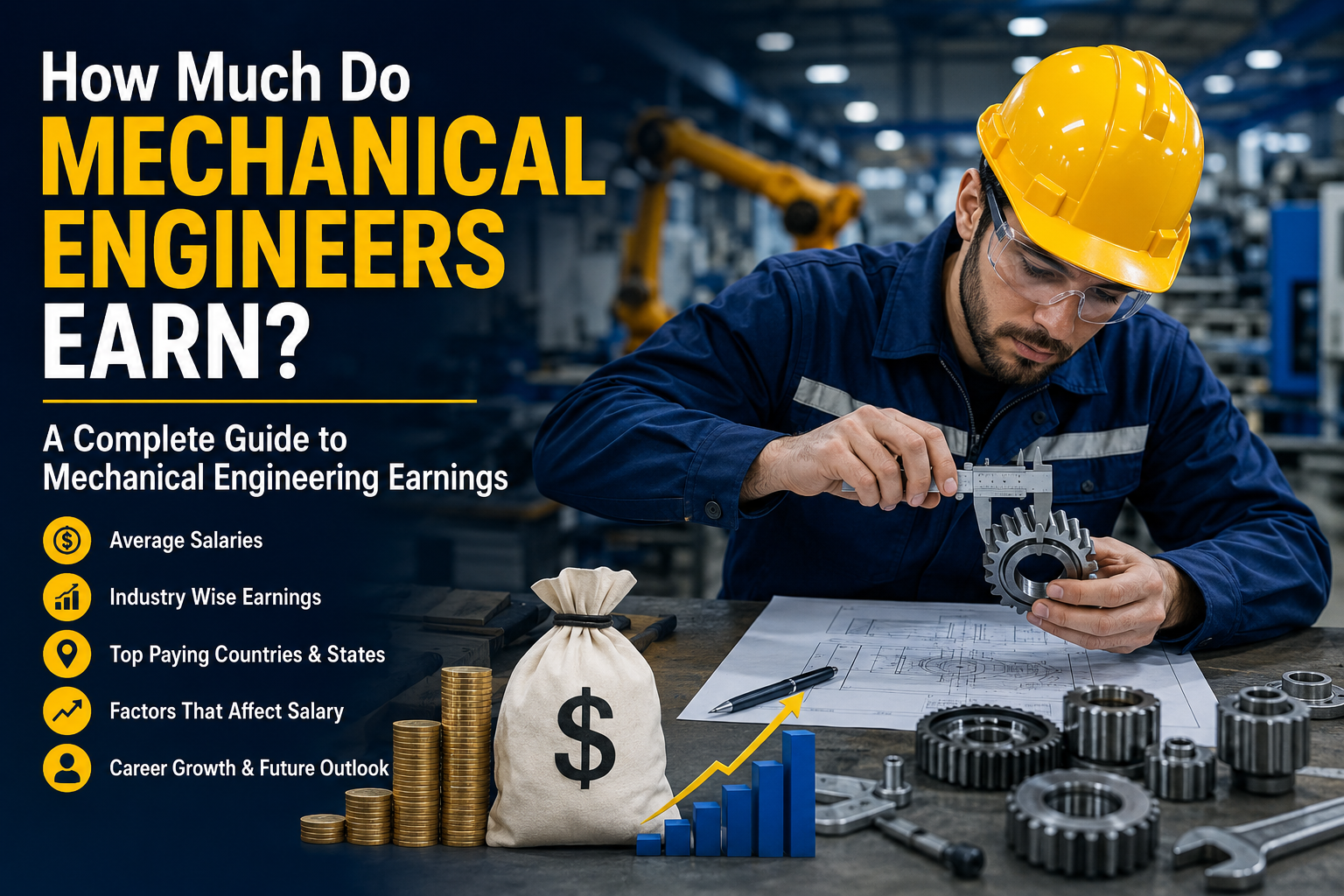
Mechanical engineering earnings have become a popular topic as more students and professionals explore careers in engineering. Mechanical engineering is one of the oldest and most versatile engineering disciplines, offering opportunities in industries such as manufacturing, aerospace, automotive, robotics, energy, healthcare, and construction. Because mechanical engineers are needed in almost every sector, salaries are generally competitive and continue to grow with experience and specialized skills.
In this guide, you’ll learn everything about mechanical engineering earnings, including average salaries, factors that influence income, the highest-paying industries, career growth opportunities, and practical ways to increase your earning potential.
What Does a Mechanical Engineer Do?
Mechanical engineers design, develop, test, and improve machines, mechanical systems, and manufacturing processes. They work on products ranging from small medical devices to aircraft engines, industrial machinery, and renewable energy systems.
Typical responsibilities include:
- Designing mechanical components using CAD software.
- Testing prototypes and improving product performance.
- Managing manufacturing processes.
- Troubleshooting equipment problems.
- Collaborating with electrical, civil, and software engineers.
- Ensure products are safe and of good quality.
The wide variety of industries employing mechanical engineers has a direct impact on mechanical engineering earnings, as salaries vary depending on the complexity of the work and industry demand.
Average Mechanical Engineering Earnings in 2026
One of the biggest questions prospective engineers ask is how much they can realistically earn. The answer depends on location, education, industry, and experience.
Typical salary ranges include:
- Entry-level: $65,000–$80,000 per year
- Mid-level: $85,000–$110,000 per year
- Senior-level: $115,000–$145,000+ per year
- Engineering managers: $150,000–$200,000+ per year
Hourly wages typically range from $30 to over $70 per hour, depending on expertise and job role.
Overall, mechanical engineering earnings remain among the strongest in the engineering profession because of the consistent demand for skilled engineers worldwide.
Mechanical Engineering Earnings by Experience Level
Experience is one of the most important factors affecting salary growth. As engineers gain technical knowledge, project management experience, and leadership skills, their income typically increases significantly.
Entry-Level Mechanical Engineers
Graduates with little or no experience generally start with competitive salaries. During this stage, engineers learn industry standards, software tools, and real-world engineering practices.
Typical salary:
- $65,000–$80,000 annually
Mid-Level Mechanical Engineers
After several years of experience, engineers often manage projects, mentor junior staff, and handle more complex technical responsibilities.
Typical salary:
- $85,000–$110,000 annually
Senior Mechanical Engineers
Senior professionals oversee large engineering projects, develop innovative solutions, and influence company decisions.
Typical salary:
- $115,000–$145,000+ annually
Engineering Managers
Mechanical engineers who move into management positions can earn significantly more due to increased responsibilities involving budgeting, staffing, and strategic planning.
Typical salary:
- $150,000–$200,000+ annually
Clearly, mechanical engineering earnings increase steadily throughout an engineer’s career.
Mechanical Engineering Earnings by Industry
Not all industries pay the same. Some sectors require advanced technical knowledge or involve higher-risk projects, leading to better compensation.
Aerospace
Engineers working on aircraft, satellites, and defense systems often receive excellent salaries due to the complexity of their work.
Automotive
Automotive companies hire engineers to develop engines, electric vehicles, safety systems, and manufacturing processes.
Manufacturing
Manufacturing remains one of the largest employers of mechanical engineers, offering stable career opportunities and competitive pay.
Oil and Gas
Mechanical engineers in oil and gas frequently earn higher-than-average salaries because of demanding work environments and specialized equipment.
Renewable Energy
As governments invest in clean energy, engineers specializing in wind, solar, and hydrogen technologies enjoy growing demand and attractive salaries.
Robotics and Automation
Automation engineers develop robotic systems for factories, healthcare, and logistics. Their specialized expertise contributes to higher mechanical engineering earnings.
Medical Devices
Mechanical engineers designing surgical equipment, prosthetics, and medical technology often enjoy strong salaries while contributing to healthcare innovation.
Mechanical Engineering Earnings by Location
Location has a major influence on salary because labor demand, living costs, and economic conditions differ around the world.
Highest-Paying Countries
Mechanical engineers generally earn the highest salaries in:
- United States
- Switzerland
- Germany
- Canada
- Australia
- Norway
- Denmark
Highest-Paying U.S. States
Within the United States, salaries are often higher in states with strong aerospace, technology, and energy industries, including:
- California
- Texas
- Washington
- Massachusetts
- Colorado
Although these regions offer higher mechanical engineering earnings, they may also have higher living expenses. It’s important to consider both salary and cost of living when evaluating job offers.
Factors That Affect Mechanical Engineering Earnings
Several factors determine how much a mechanical engineer earns throughout their career.
Education
Engineers with master’s degrees or doctoral qualifications often qualify for specialized and leadership roles with higher salaries.
Certifications
Professional certifications can improve credibility and open doors to better-paying positions.
Technical Skills
Expertise in software such as:
- SolidWorks
- AutoCAD
- CATIA
- MATLAB
- ANSYS
- Siemens NX
can significantly increase mechanical engineering earnings because employers value these in-demand skills.
Industry
Working in aerospace or oil and gas usually pays more than traditional manufacturing.
Experience
Each year of practical experience improves technical ability, making engineers more valuable to employers.
Company Size
Large multinational corporations often provide higher salaries, better bonuses, and stronger benefits than smaller organizations.
Negotiation Skills
Confident salary negotiation can increase starting pay and long-term earning potential.
Highest-Paying Mechanical Engineering Specializations
Some mechanical engineering fields offer substantially higher salaries because they require advanced expertise.
Robotics Engineering
Designing intelligent robotic systems for manufacturing and healthcare.
Aerospace Engineering
Developing aircraft, spacecraft, and defense technologies.
Mechatronics Engineering
Combining mechanical, electrical, and computer engineering to create advanced automated systems.
Nuclear Engineering
Working on nuclear power generation and reactor systems.
Energy Systems Engineering
Designing efficient power generation and renewable energy solutions.
Petroleum Equipment Engineering
Developing equipment used in oil and gas extraction.
Choosing one of these specialties can significantly increase mechanical engineering earnings over time.
Career Growth and Salary Progression
Mechanical engineering offers excellent long-term career growth. Many engineers begin as junior designers before advancing into senior technical roles, project management, executive leadership, or independent consulting.
Typical career path:
- Graduate Engineer
- Mechanical Engineer
- Senior Mechanical Engineer
- Lead Engineer
- Engineering Manager
- Director of Engineering
- Vice President of Engineering
Each promotion typically comes with increased responsibilities and higher mechanical engineering earnings, making it a rewarding long-term career.
Tips to Increase Mechanical Engineering Earnings
If you want to maximize your income, consider the following strategies:
Learn Advanced Engineering Software
Master industry-standard programs such as SolidWorks, CATIA, ANSYS, MATLAB, and AutoCAD to improve your marketability.
Earn Professional Certifications
Certifications demonstrate expertise and can help you qualify for higher-paying positions.
Build Leadership Skills
Project management and communication skills are valuable for advancing into management roles.
Work in High-Paying Industries
Target sectors such as aerospace, robotics, renewable energy, medical devices, or oil and gas, where salaries tend to be higher.
Continue Learning
Stay updated with new technologies, including artificial intelligence, automation, and additive manufacturing, to remain competitive.
Consider Freelancing or Consulting
Experienced engineers can supplement their income through consulting, product design, or freelance engineering projects, further increasing mechanical engineering earnings.
Job Outlook for Mechanical Engineers
The future looks promising for mechanical engineers. Advancements in automation, electric vehicles, renewable energy, robotics, and smart manufacturing continue to create new opportunities.
Employers are increasingly seeking engineers with expertise in:
- Artificial Intelligence integration
- Industrial automation
- Sustainable manufacturing
- Electric vehicle technology
- Robotics
- 3D printing
- Energy-efficient systems
These emerging fields are expected to support continued growth in mechanical engineering earnings as demand for specialized talent increases.
Frequently Asked Questions
Is mechanical engineering a high-paying career?
Yes. Mechanical engineering offers competitive salaries, strong job stability, and excellent long-term earning potential, especially in specialized industries.
Can mechanical engineers earn over $100,000?
Absolutely. Many experienced mechanical engineers and managers earn well above $100,000 annually, particularly in high-demand industries and regions.
Which industry pays mechanical engineers the most?
Industries such as aerospace, oil and gas, robotics, renewable energy, and medical devices are among the highest-paying sectors for mechanical engineers.
Which country offers the best mechanical engineering earnings?
Countries like the United States, Switzerland, Germany, Canada, and Australia are known for offering some of the highest salaries for mechanical engineers.
Is mechanical engineering still worth studying in 2026?
Yes. With growing demand across advanced manufacturing, clean energy, automation, and transportation, mechanical engineering remains a valuable and rewarding career choice.
Conclusion
Mechanical engineering earnings can be highly rewarding, making this profession an excellent choice for individuals who enjoy problem-solving, innovation, and technology. While entry-level salaries are already competitive, income grows steadily with experience, advanced skills, certifications, and specialization. Engineers working in high-demand industries such as aerospace, robotics, renewable energy, and oil and gas often enjoy some of the highest salaries in the field.
By continuously improving your technical expertise, staying current with emerging technologies, and pursuing leadership opportunities, you can significantly increase your mechanical engineering earnings throughout your career. Whether you’re a student considering this profession or an experienced engineer looking to boost your income, mechanical engineering offers outstanding long-term financial and professional growth.